
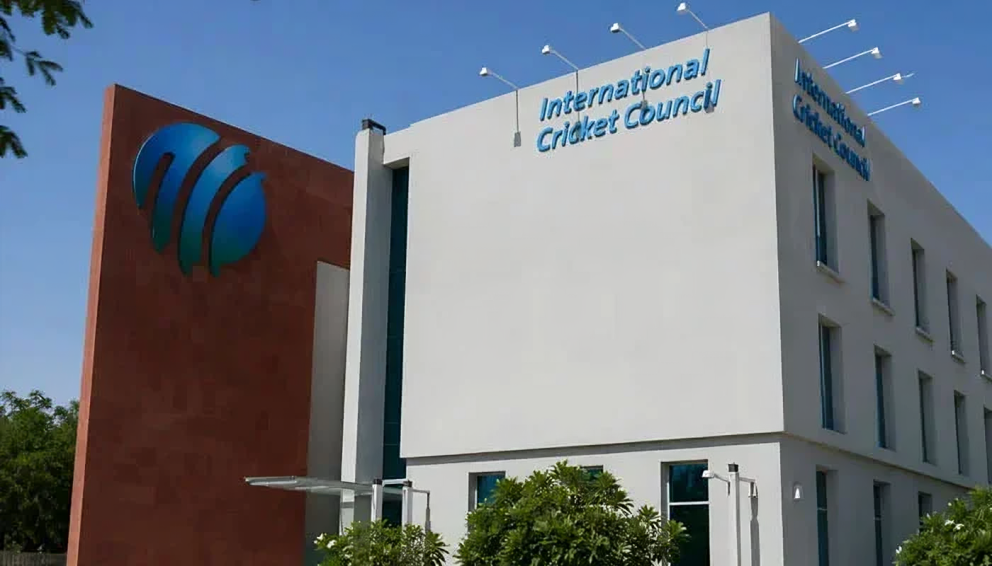
The International Cricket Council (ICC) has officially approved sweeping changes to the formats of both the ICC Men’s Cricket World Cup and the ICC Men’s T20 World Cup, aiming to make every stage of the tournaments more competitive and meaningful.
For the 14-team Men’s Cricket World Cup, a new three-stage format will be introduced. The tournament will begin with a “Super Series” featuring the teams ranked 12th, 13th, and 14th. The winner of this stage will advance to the second round, where 12 teams will be divided into two groups of six.
From the group stage, the top three teams from each group, along with the next highest-ranked team, will qualify for the new “Super 7” stage. All seven teams will play against one another, with the top four progressing to the semi-finals.
According to the ICC, the revised structure is designed to increase the importance of every match from the opening day of the tournament.
The ICC has also approved major changes to the 20-team Men’s T20 World Cup. The existing Super 8 stage will be replaced by a new Super 10 format. The tournament will start with five groups of four teams, with the top two teams from each group advancing to the Super 10 stage.
In the Super 10 round, the two group winners will qualify directly for the semi-finals, while the teams finishing second and third in each group will compete in newly introduced Eliminator matches. The winners of those Eliminators will secure the remaining semi-final spots.
The governing body believes the new format will raise the quality and intensity of competition throughout the tournament.
In addition, the ICC has given preliminary approval for a new 16-team global T20 tournament exclusively for Associate nations. The event is expected to be held before the T20 World Cup, with final approval anticipated in November.
The ICC Board also approved a new qualification pathway for the 2028 Men’s T20 World Cup. Teams that fail to qualify directly through the 2026 edition will compete in a Global Qualifier, while additional qualification places will be allocated across Africa, Asia, Europe, the Americas, and the East Asia-Pacific region.

